Why the ticket is the last chapter of the story, not the first
Most of us know what happens when technology stops working at work. We call IT. We open a service portal, start a chat, or call the help desk. A ticket gets created, someone investigates the problem, fixes it, and we get back to work.
It is such a familiar sequence that we rarely question it. Technology works, something goes wrong, we report it, and IT fixes it.
But is that really how digital work happens?
Think about an ordinary working day. We switch on our laptop, check email, join meetings, open documents, access business applications, search for information, communicate with colleagues, approve requests, create presentations and increasingly interact with AI assistants. We move continuously between devices, applications, networks, cloud services and digital processes.
Behind these ordinary interactions, thousands of digital signals are constantly being generated. Applications launch and respond. Devices consume resources. Networks connect. Authentication succeeds. Meetings begin. Pages load. Processes start and stop. Across an enterprise, these become millions of signals describing how digital work is actually happening.
Most of the time, we never notice any of them. And that is exactly how it should be.
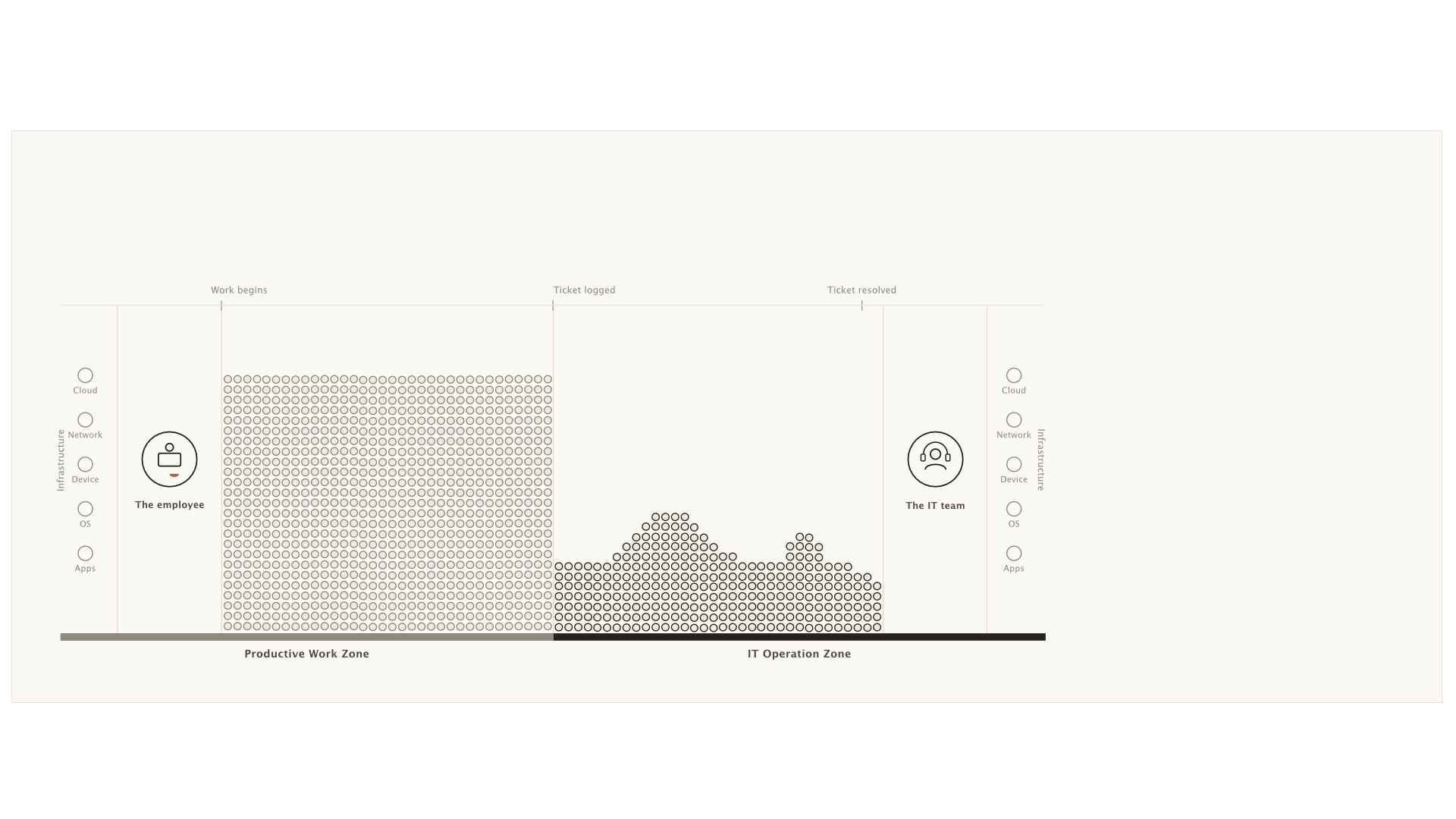
The Productive Work Zone
When technology works well, it almost disappears from our attention. We click and the application opens. We join a meeting and the connection works. We search and find what we need. We submit something and the transaction completes.
We are not thinking about network latency during a customer meeting; we are thinking about the customer. We are not thinking about the operating system while preparing a presentation; we are thinking about the story we are trying to tell. Technology stays in the background while our work stays in the foreground.
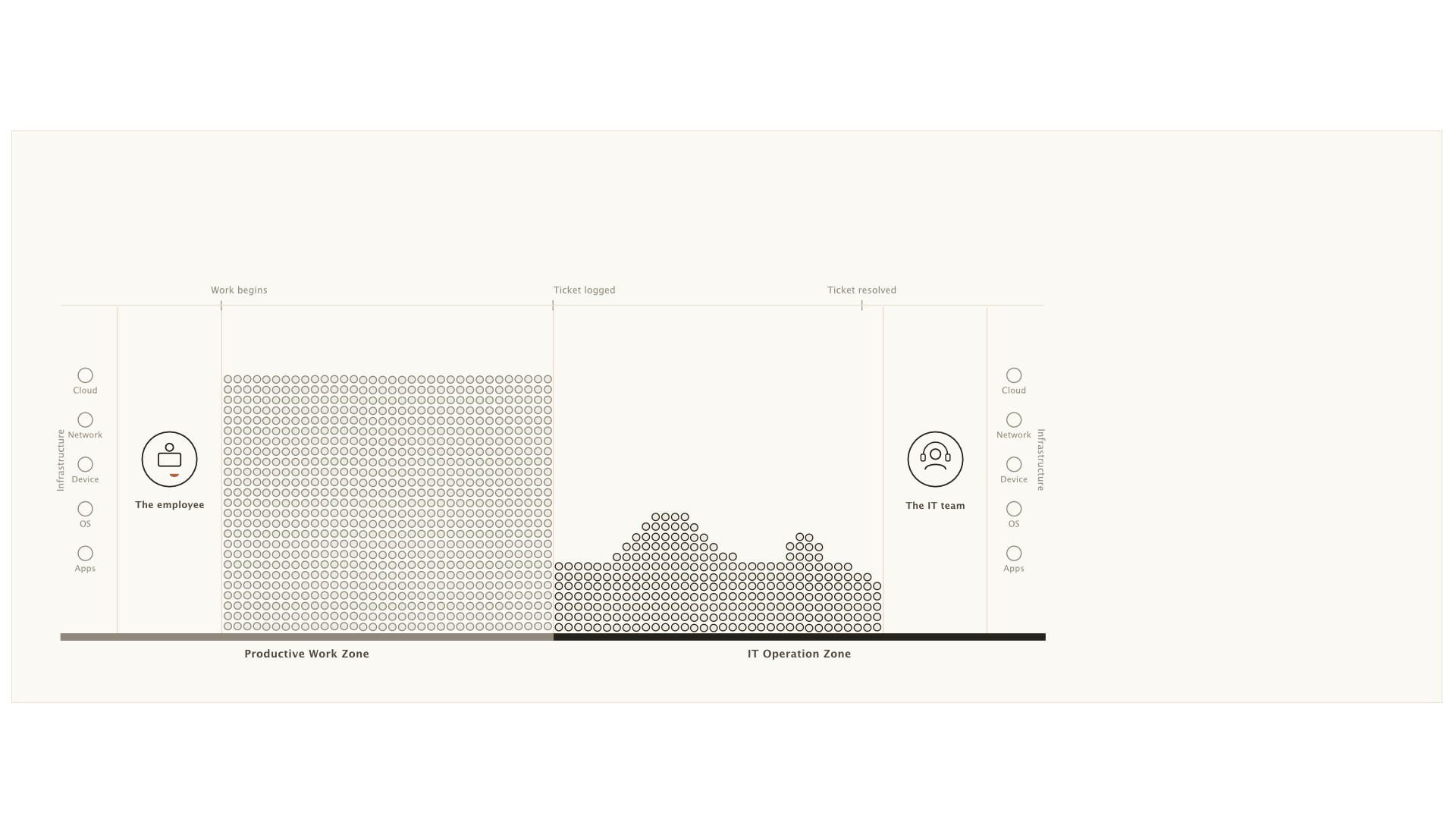
This is the Productive Work Zone — where technology does what it was introduced to do: enable the work without becoming the work.
Of course, technology doesn't always work as expected. And when it prevents us from doing our work, we know what to do.
We contact IT.
The IT Operations Zone
When we contact IT, the problem becomes visible. It enters a familiar operational process: it is recorded, investigated, diagnosed, resolved and eventually closed.
This is the IT Operations Zone — the part of the digital work journey organizations have spent decades building processes, tools and teams to manage.
Put the Productive Work Zone and the IT Operations Zone together, and the digital work journey appears remarkably simple. We work, something goes wrong, we contact IT, and IT fixes it.
Productive Work → IT Operations.
But the real digital work journey is not that simple.
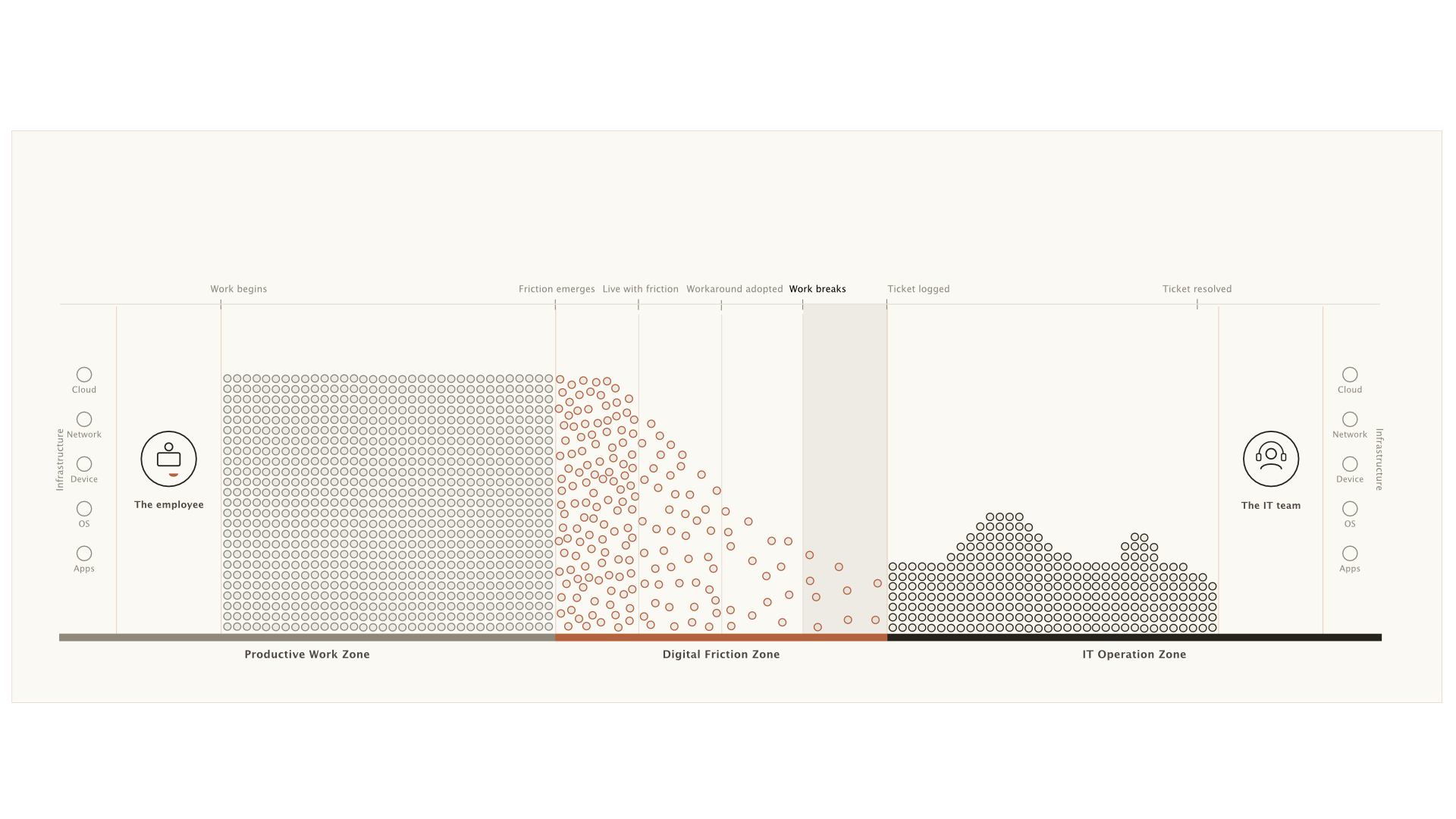
There is a lot that happens between the moment we are working productively and the moment we finally raise a ticket. Technology does not always move from working to broken in one clean step. As we work, we constantly encounter moments where technology slows us down, interrupts us, confuses us or simply makes the work harder than it needs to be. Most of these moments do not stop us from working, and most of them never become tickets.
This is the largely unseen space between working and broken.
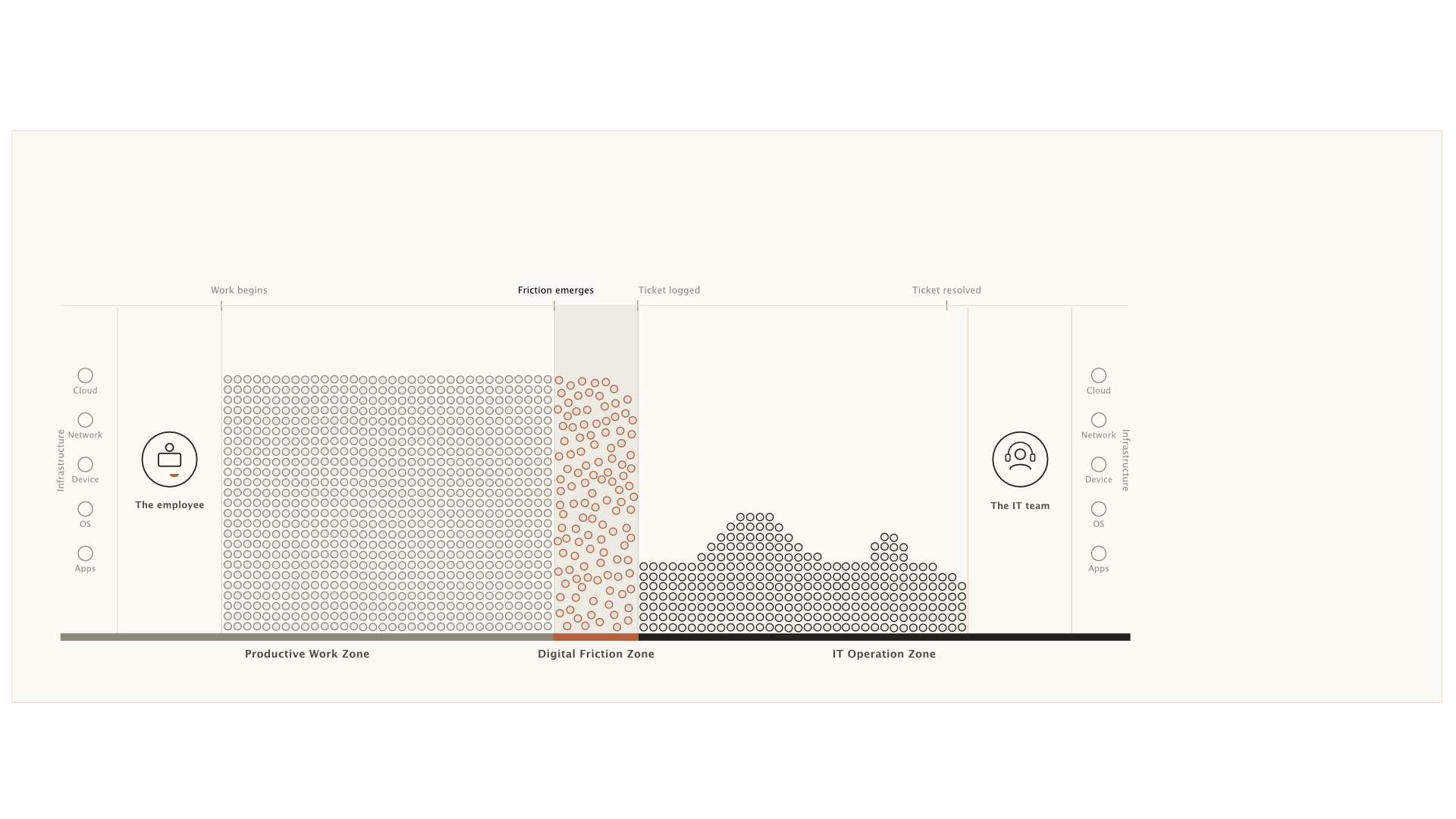
The Digital Friction Zone
What happens in this space is digital friction — anything in our interaction with technology that hinders the productive work we are trying to perform. Work may still continue, but not as it should. It takes longer, demands more effort, requires another attempt or forces us to change the way we work.
And not all digital friction comes from technology failing.
Sometimes the friction is technical. The technology itself isn't performing as expected. A device may be slow, an application may not respond properly, a connection may be unstable, or something in the digital environment may simply not behave the way it should.
At other times, the friction is human. The technology may be working perfectly well, but we may not know what to do, how to use it, which process to follow or even that a useful capability exists. A new feature may appear without us understanding how it helps. A process may change without us knowing what to do differently. A new application or AI tool may be available, but we may not understand how it fits into our work.
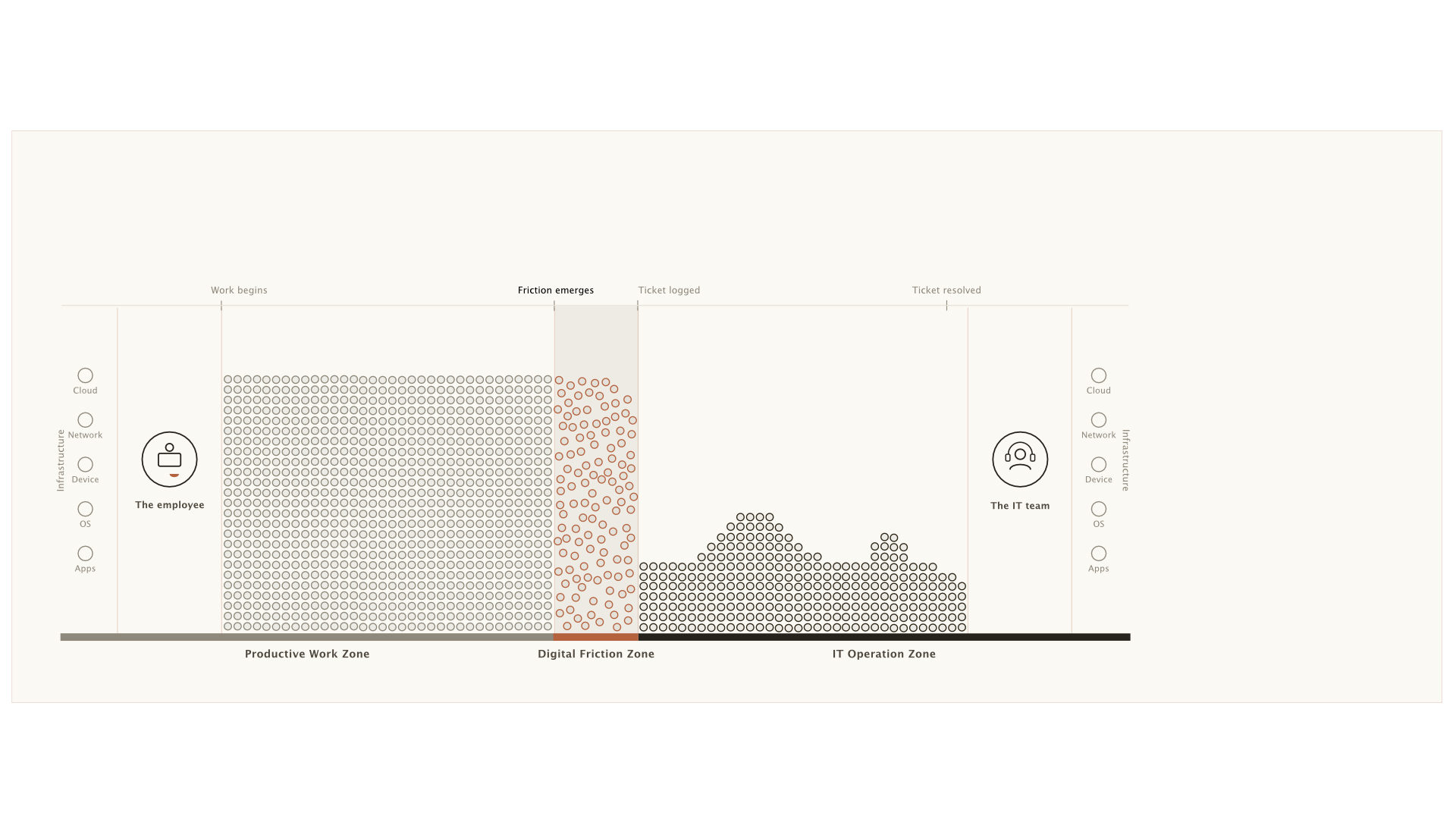
One is technical digital friction. The other is human digital friction. They may originate differently, but from our perspective the effect is the same: something has come between the digital and the work.
When we encounter this friction, we rarely contact IT immediately. As long as we can continue working, our first response is often much simpler.
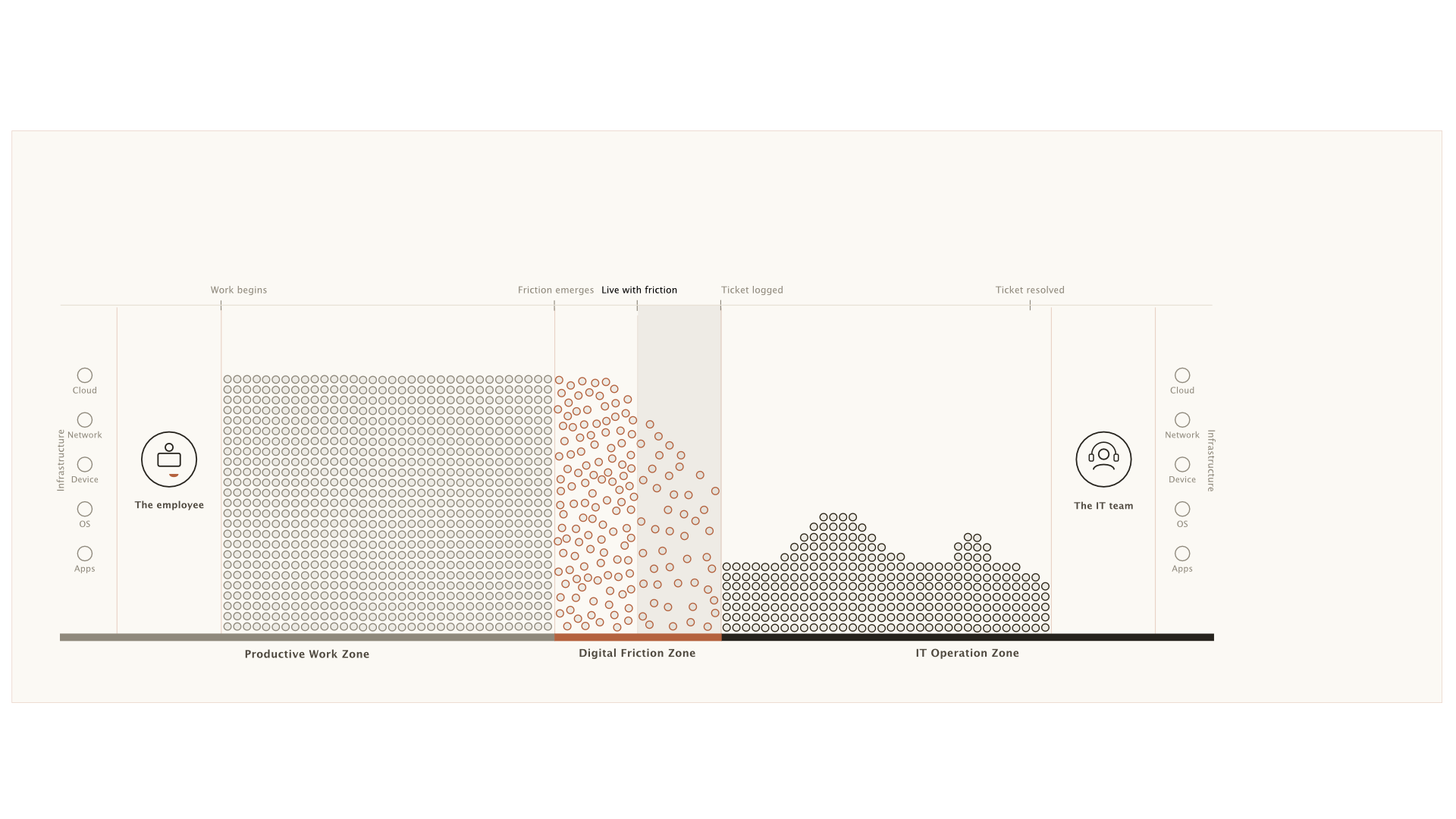
We live with it.
We Learn to Live With It
If our laptop takes five minutes to start every morning, we switch it on and go make coffee. If an application only opens after a few attempts, we learn to try again. If video calls become unstable with the camera on, we leave the camera off.
None of these actions fixes the underlying problem. We have simply adapted ourselves around it.
Eventually, we may stop seeing it as a problem altogether. My laptop is just slow. That application always does that. You have to try it a couple of times.
A technology problem has quietly become part of our behaviour.
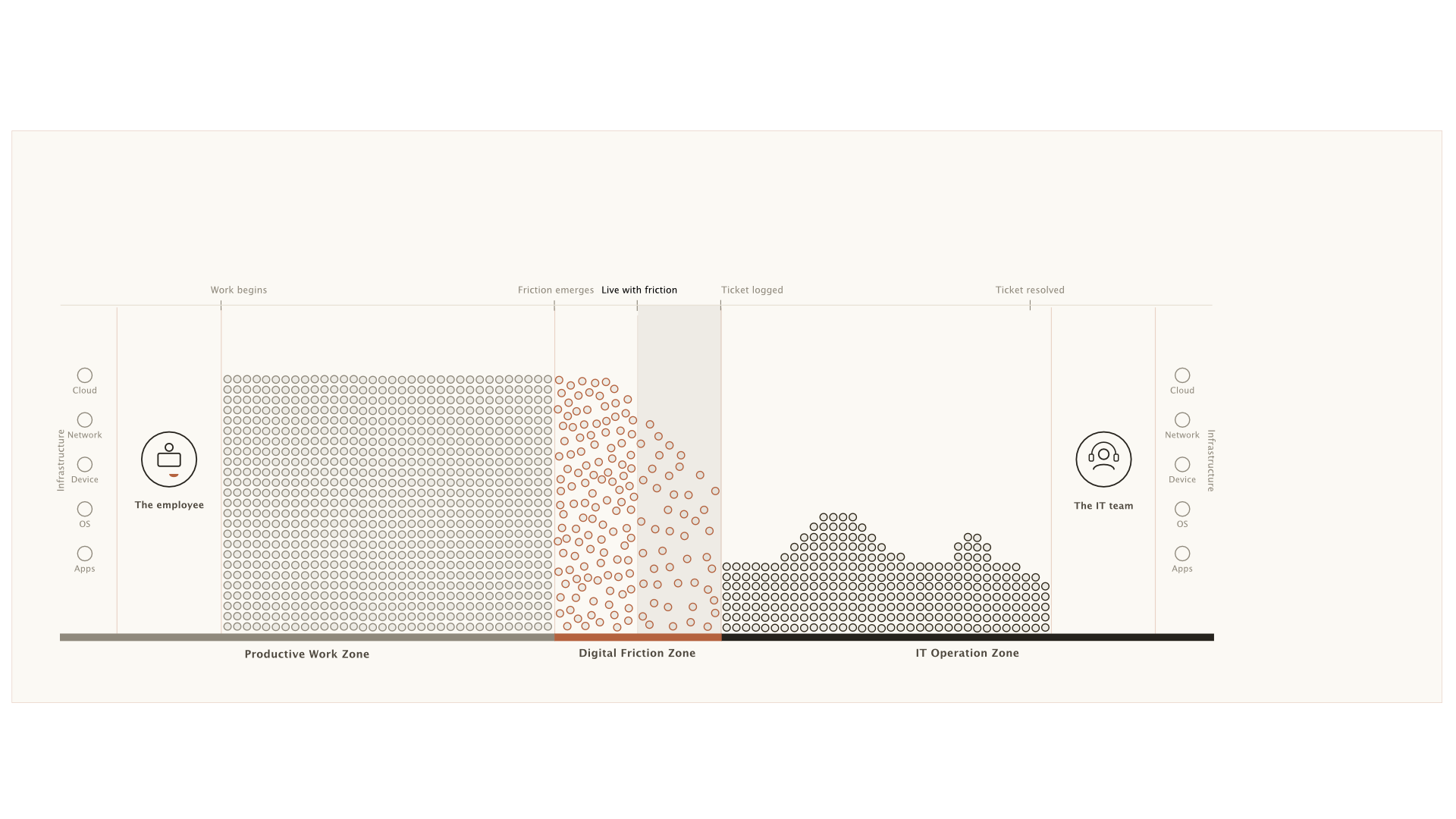
And because we have found a way to continue, we don't raise a ticket. IT may see nothing unusual while we continue paying for the friction through our time, attention and productivity.
But there is only so much friction we are willing to absorb. When living with it starts getting in the way of what we need to accomplish, we don't necessarily turn to IT even then. Quite often, we first try to solve the problem ourselves.
We find another way to get the work done.
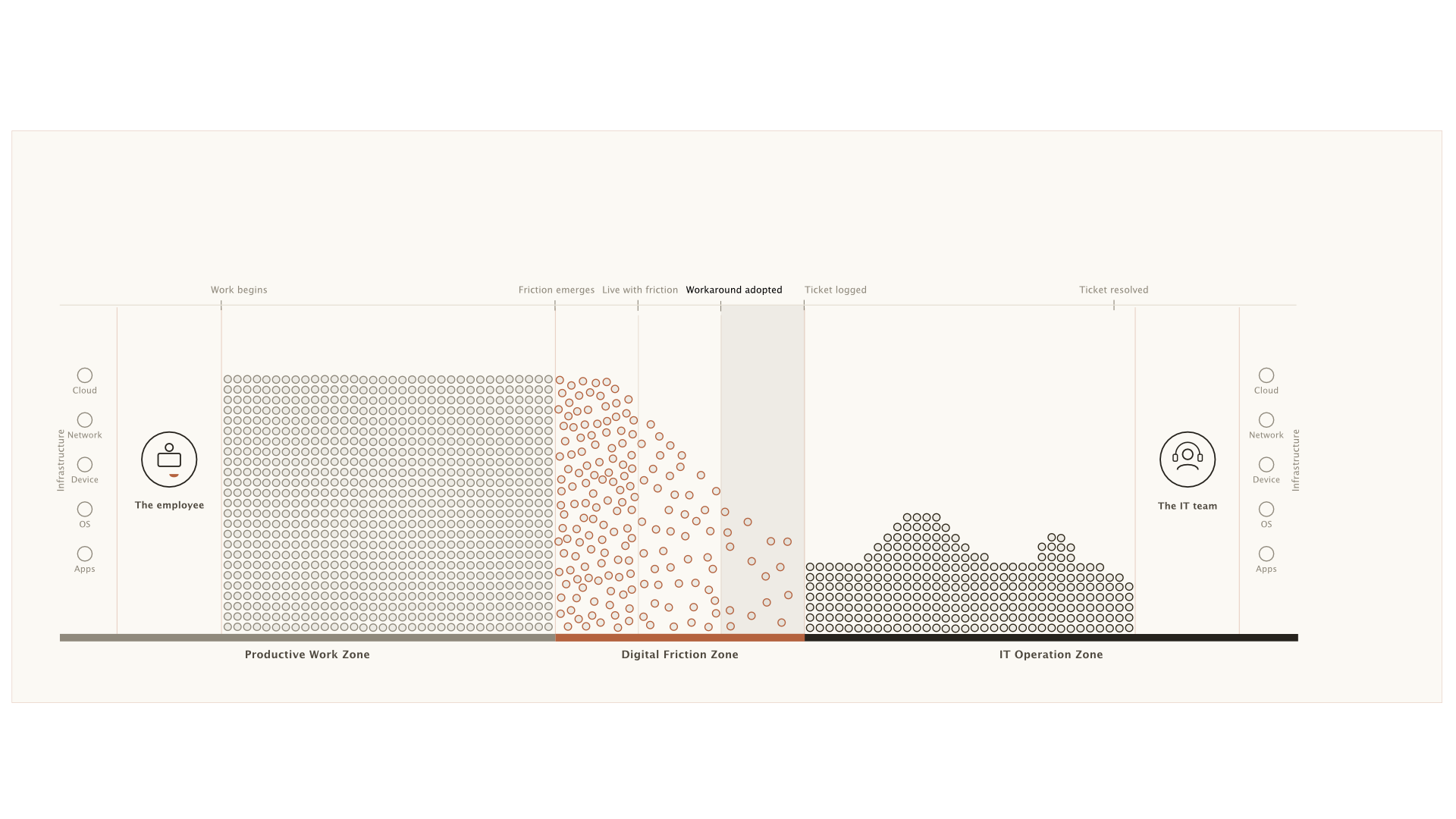
We Find a Workaround
This is where a workaround begins. We change the way we work to get around whatever is creating the friction. If one browser doesn't work, we use another. If an application is unreliable, we find an alternative. If the official process is cumbersome, perhaps we create a spreadsheet.
We are not necessarily trying to bypass IT. We are simply trying to get our work done.
If one browser doesn't work, we use another. If an application is unreliable, we find an alternative. If the official process is cumbersome, perhaps we create a spreadsheet. If the network is unstable, we switch networks.
We are not necessarily trying to bypass IT. We are trying to finish our work.
This is where digital friction starts doing something more significant. It changes our behaviour.
AI makes this particularly visible. If the AI assistant provided by our organization doesn't give us what we need, we may turn to another one we already know. It works, so we use it again. Soon it becomes part of how we work, perhaps including information or documents the organization never intended to leave its approved environment.
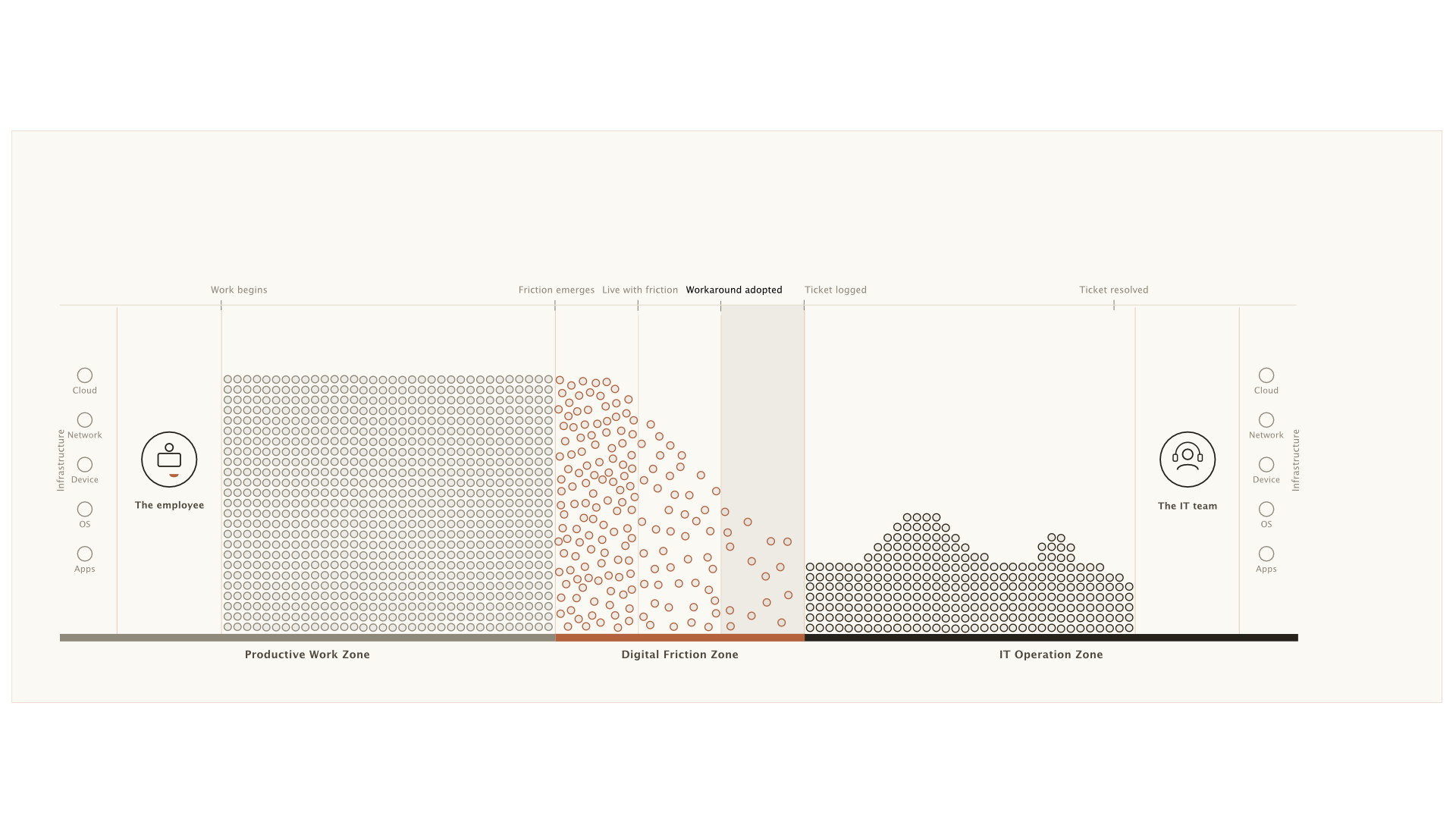
What later appears as shadow IT or shadow AI may therefore have started with something much more ordinary: we encountered friction and found an easier way to get our work done.
But not every friction can be lived with or worked around forever. Sometimes the problem continues to grow. Sometimes the workaround stops working. And sometimes we simply reach a point where there is no other way for us to continue.
That is when friction crosses a very different threshold.
Work Breaks
Until this point, technology may have slowed us down, interrupted us or forced us to change the way we work. But we could still find a way forward.
Now, we can't.
The friction has moved from making work difficult to preventing the work from happening.
The application that used to take three attempts to open now doesn't open at all. The laptop that took five minutes to start won't start. The VPN that occasionally disconnected now refuses to connect.
We still try what we know. We retry, restart, reconnect, change browsers, ask a colleague or wait and try again.
But nothing works.
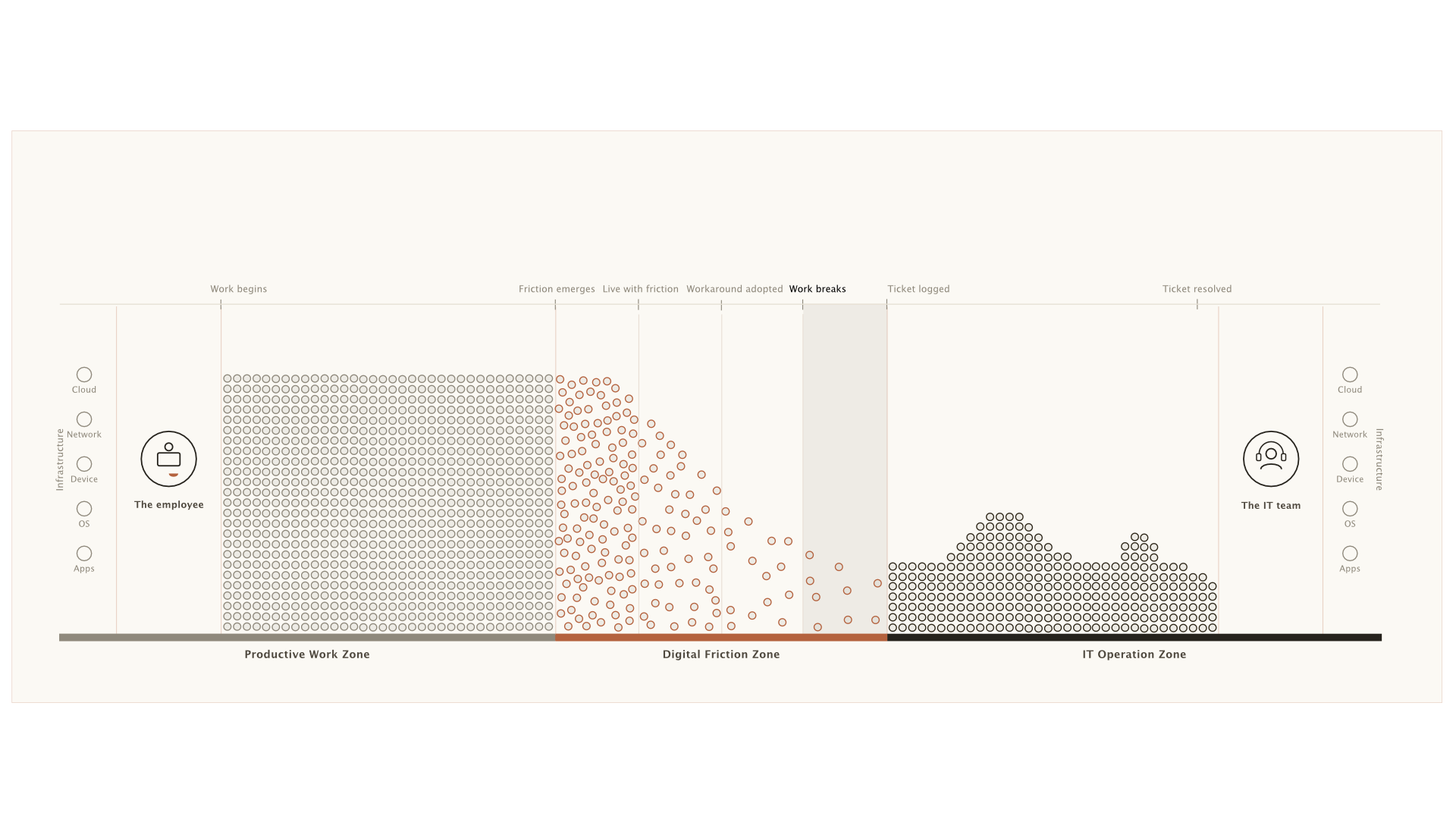
Until this point, technology was adding friction to our work. Now we can no longer continue.
Work has broken.
And only now, after our tolerance and workarounds have been exhausted, do we finally ask IT for help.
We Raise the Ticket
We open the service portal, start a chat or call the help desk. A ticket gets created.
Perhaps the system records the incident at 10:42 AM.
But did the problem really begin at 10:42?
Perhaps we first noticed it last week. Maybe we have restarted the application twelve times since then. Perhaps we lost thirty minutes this morning, changed browsers, asked colleagues for help or found another way to complete the task.
For IT, the problem appeared at 10:42.
For us, 10:42 was simply when we finally told someone about it.And that distinction reveals two very different versions of the same journey.
IT traditionally sees:
Ticket → Diagnose → Resolve → Close
But we experience:
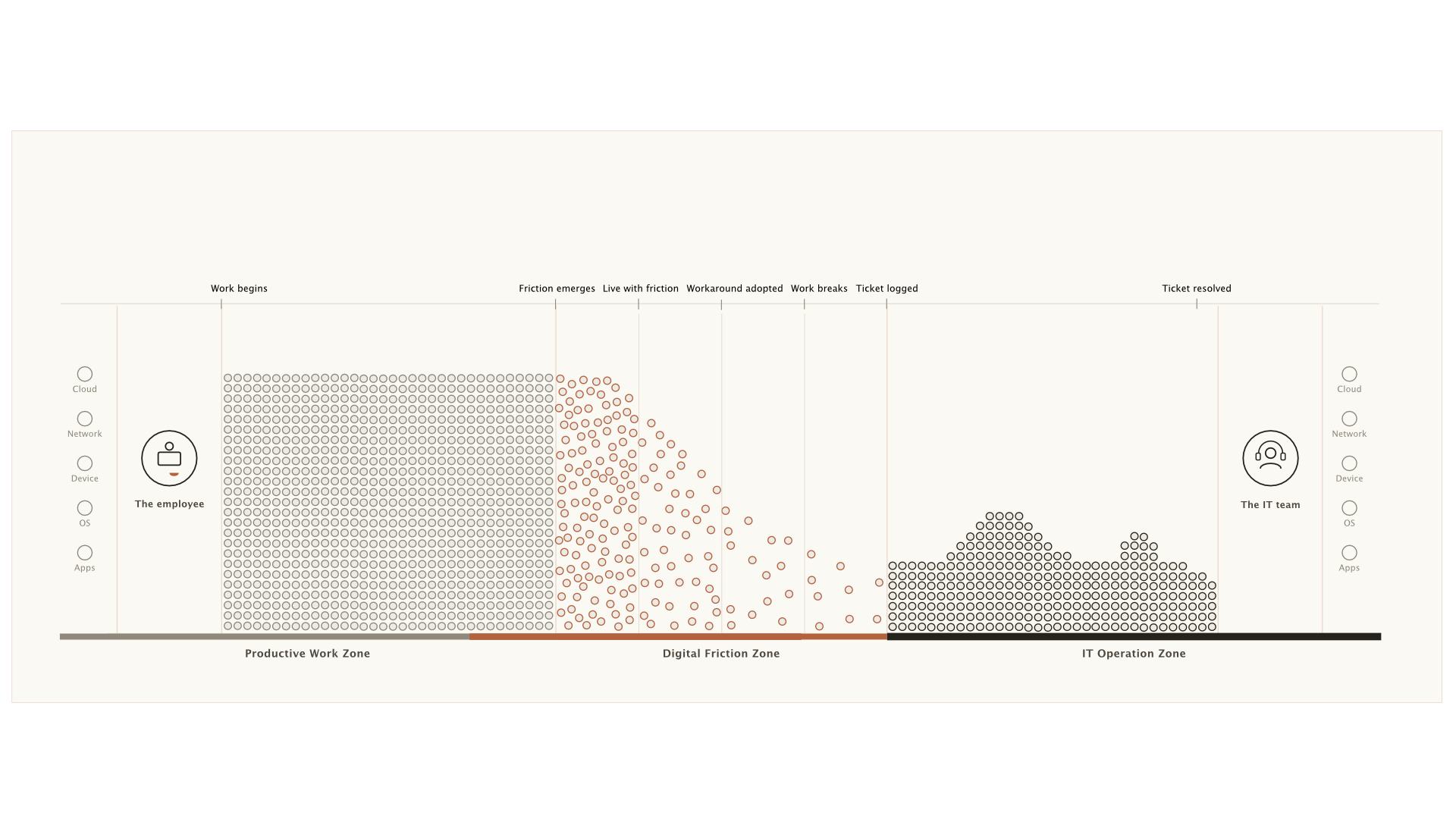
Work → Friction → Live with it → Work around it → Work breaks → Ticket
The laptop didn't suddenly become slow because we created a ticket. The application didn't begin struggling because we called the service desk. The underlying condition was already there. We were already experiencing it and changing our behaviour around it.
The ticket simply made it visible.
The Three Zones of Digital Work
Once we look at digital work from our perspective as employees, three distinct zones begin to emerge.
We start in the Productive Work Zone, where technology enables us to work and largely stays out of our way.
When something begins interfering with that work, we enter the Digital Friction Zone. The friction may be technical or human. We notice it, tolerate it, adapt to it and sometimes find our own ways around it. Much of this can happen without IT ever knowing.
Eventually, some friction becomes severe enough that work breaks. We ask for help, a ticket gets created and the problem enters the IT Operations Zone, where it becomes visible, managed and resolved.
So the complete digital work journey looks less like:
Productive Work → IT Operations
and much more like:
Productive Work → Digital Friction → IT Operations.
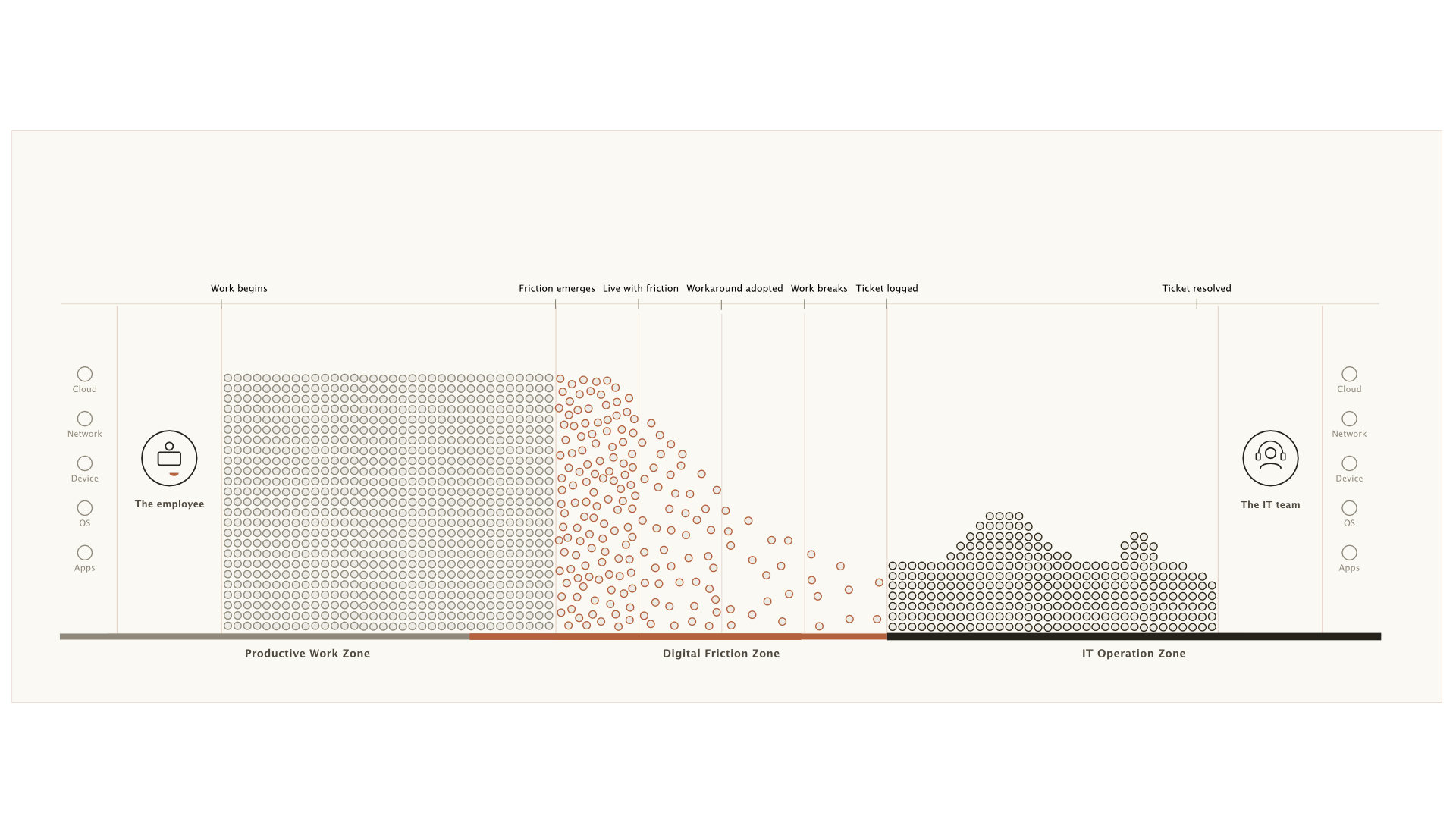
What is interesting is that the Digital Friction Zone isn't new. We have always waited for slow computers, retried applications, restarted devices, asked colleagues for help, avoided confusing features and invented our own ways of getting things done.
It has always been part of digital work.
We just haven't always thought of it as a distinct part of the journey.
And that is why a ticket can tell us only so much. It tells us that someone eventually asked for help. It doesn't tell us how long they struggled before asking, how many others experienced the same thing and never asked, how much time was lost, what workaround was created or how behaviour changed along the way.
A ticket captures an important moment in the digital work journey. But it doesn't capture the whole journey.
Because digital work was happening long before the ticket.
And quite often, so was the problem.
A ticket is not where the story begins. It is simply where one part of the story finally becomes visible.